|
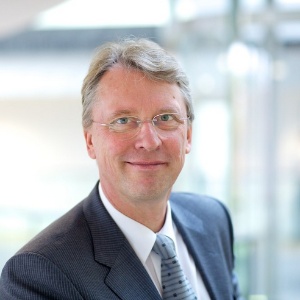
Christoph Meinel
German University of Digital Science
Germany
german-uds.de/meinel
|
Short Bio
Christoph Meinel (Univ.-Prof., Dr.rer.nat., Dr.sc.nat., 1954) is the founder and president of the German University of Digital Science, the first digital university of Germany. From 2004 to 2023 he was CEO and Scientific Director of the Hasso Plattner Institute for Digital Engineering (HPI) at the University of Potsdam. There he was Professor of Computer Science and held the chair for "Internet Technologies and Systems".
Since 2012, Meinel has been a member of acatech, the German Academy of Science and Engineering. He is chairman or member of numerous scientific committees, advisory boards and supervis
ory boards, and a visiting professor at several universities in China (TU Beijing, Nanjing, Shanghai). In 2019, he will be inducted into the New Internet IPv6 Hall of Fame.
With his team, he designed and built the first European MOOC learning platform openHPI.de, which has been used by partners such as the WHO (openWHO.org), SAP (openSAP.com), and the Stifterverband (KI-Campus.org). MOOCs are interactive online courses for thousands of learners who can network and exchange ideas while learning. Across all platforms, there are more than 16 million enrollments
Meinel studied mathematics and computer science at the Humboldt University of Berlin from 1974 to 1979, where he received his Dr. rer. nat. degree in 1981. In 1988 he habilitated at the Institute of Mathematics of the Academy of Sciences in Berlin. In 1992 he was appointed full professor (C4) of Computer Science at the University of Trier. From 1998 to 2002, in addition to his professorship, he was Director and Managing Director of the Institut für Telematik e.V. From 1996 to 2007, Christoph Meinel was a member of the Scientific Board of IBFI Schloss Dagstuhl. From 1992 to 2007, he was the spokesman for the "Complexity" division of the German Informatics Society (GI). He has received numerous invitations to speak in Germany and abroad, is involved in a number of international program committees, has organized various international symposia and conferences, and was and is a member of a number of supervisory boards, e.g. the Security Advisory Board of SAP.
... More >>
|
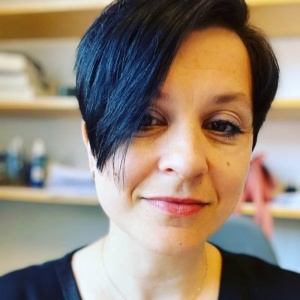
Olga Viberg
KTH Royal Institute of Technology
Sweden
|
Short Bio
Olga Viberg is associate professor in Media Technology with specialization in Technology-Enhanced Learning at the School of Electrical Engineering and Computer Science at KTH.
Viberg's research includes a focus on the learning analytics in higher education, the application of mobile technology in l education, integration of formal and informal learning environments, design for learning, self-regulated learning, , cross-cultural research and responsible use of student data in education, focusing on the issues of privacy and trust.
She has served as the keynote speaker at several prestigious internation
al conferences and also contributed to the UNESCO policy work on quality of online education, Viberg has served as the PC chair for Learning@Scale 2023 and ECTEL 2023 conferences. She serves as the Editor-in-Chief of the International Journal of Learning Analytics.
... More >>
|
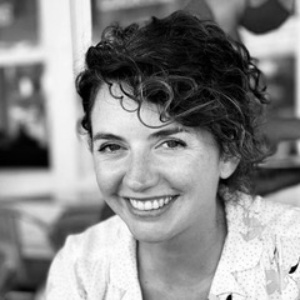
Mar Perez-Sanagustin
Université Toulouse 3 Paul Sabatier - IRIT
France
https://mperezsanagustin.wordpress.com/
|
Short Bio
Mar Pérez-Sanagustín is Associate Professor at the Université Paul Sabatier Toulouse III (France), researcher at the Talent Team of the Institut de Recherche Informatique de Toulouse (IRIT), and associate researcher at the Pontificia Universidad Católica de Chile (PUC). Mar also founded the team T4DLab at PUC, and she continues collaborating with it. Mar worked from 2011 until 2014 as a researcher at the Gradient Lab of the Gradient del Grupo de Aplicaciones y Servicios Telemáticos (GAST) at the Universidad Carlos III de Madrid (UC3M) and as a teacher in the department of Telematics Engineering, where she was a
Postdoctoral Fellow of Alianza 4 Universidades. She has been a Doctor in Information and Communication Technologies since July 2011 from the University Pompeu Fabra, where she obtained the cum laude grade with European Mention. During her PhD, Mar completed her studies with a moths stage at the LTRI group from the London Metropolitan University in London. From November 2013 until March 2014, Mar was a Fulbright fellow visiting the Stanford Research Institute (SRI) in San Francisco, USA. From 2014 until September 2018, she worked as an Associate Professor at the Pontificia Universidad Católica de Chile, where she was also the vice-dean of Engineering Education. Currently, she is still an associate researcher at this university. Her research focuses on the study of self-regulation in Online and Blended Learning environments as well as in Generative AI-mediated environments.
... More >>